The people who guide us
Learn from
your local community.
Meet the instructors and leadership of each group. Verified profiles will be added by location.
Your first step
There’s a place for you
in the roda.
No experience needed to begin exploring Capoeira.
Michigan
Kalamazoo / West Michigan

Contramestre Show Grande
To be added: approved biography
- Training history
- Show Grande started capoeira in 1998 in Detroit, MI with the group capoeira mandinga. After him first seeing capoeira on a movie. He thought that it wasn't a real martial art, and that it was only something for movies. It wasn't until going to his first real class where he fell in love with capoeira. "If I never took the chance at going to the class, who knows where I'd be". Since then he has traveled all over the world. Learning, teaching and growing with this art.
- Teaching philosophy
- I believe every student is worth the time, patience, and encouragement it takes to help them grow. I believe every student should be willing to try, even when something feels difficult or unfamiliar. Capoeira is a personal journey, and each student brings their own identity, strengths, and story to art. My goal is to help each student discover what makes them special within Capoeira while learning, training, and growing side by side with me and their team. Together, we build confidence, discipline, respect, and a love for the journey, not just the destination.
- Local instructor
- Contramestre Show Grande
Missouri
St. Louis
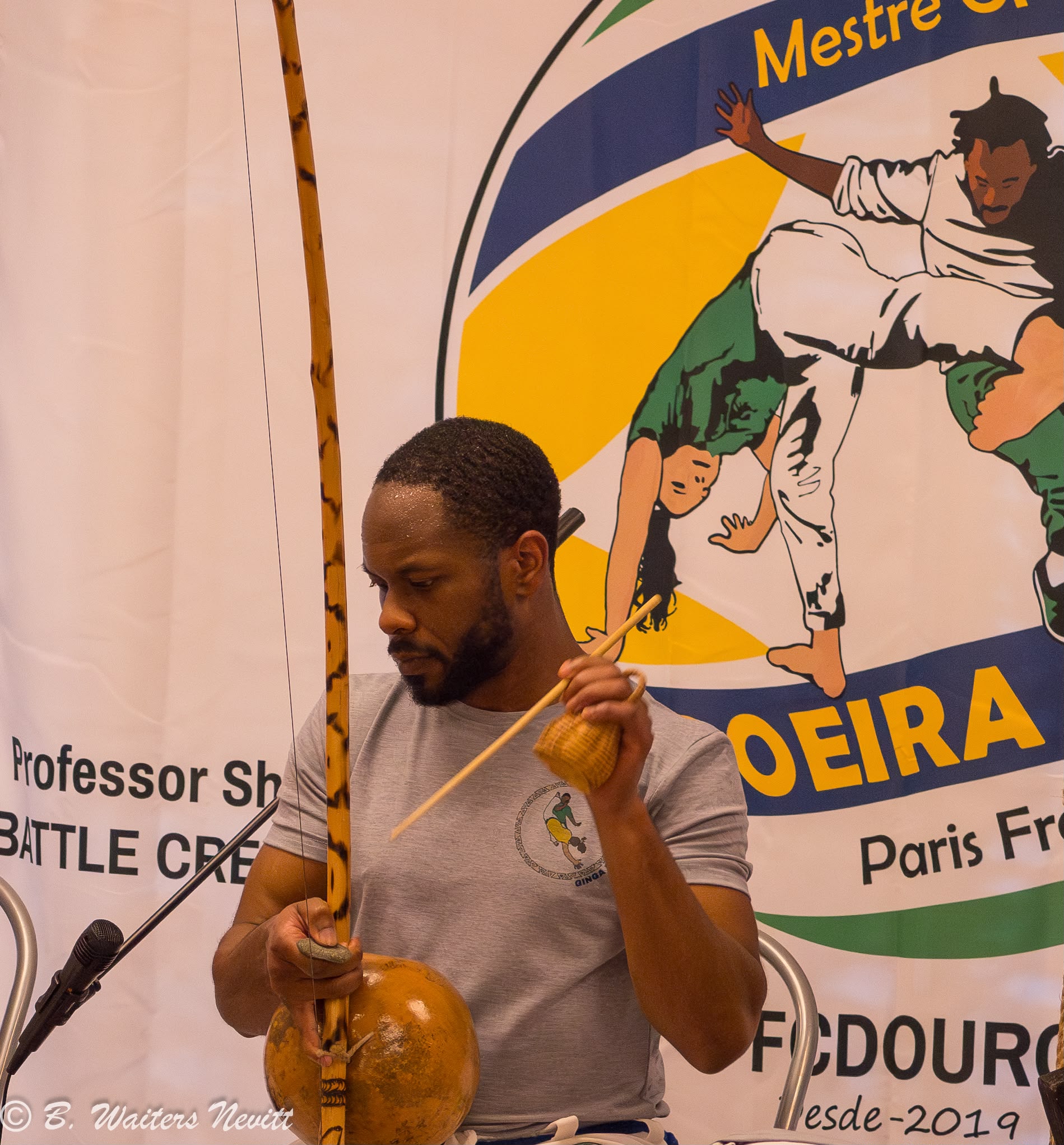
Professor Caçula
To be added: approved biography
- Training history
- Caçula, has been training Capoeira since circa 2000. His Capoeira journey began with his older cousins, Show Grande and Baiano. Caçula began teaching Capoeira in 2007. He has since taught Capoeira workshops across the United States, and in countries such as Argentina and Afghanistan. He has trained Capoeira around the world in countries throughout Europe, Asia, Central America, North America, & South America, including Brazil. Since 2013 he has been studying under Mestre Chicote of Capoeira De Ouro - Paris, France, and currently teaches youth and adults in the Saint Louis area.
- Teaching philosophy
- I believe that to effectively teach Capoeira, you first have to understand the student. Every person who walks into training brings different experiences, motivations, strengths, challenges, and goals. Taking the time to know the person—not just their physical abilities—is an essential part of helping them grow.
Every student’s progression is unique, and that progression is directly influenced by what motivates them. My responsibility as an instructor is to recognize and encourage those motivations while challenging students to move beyond the limitations they may have placed on themselves. Teaching is not about forcing every student down the same path or expecting everyone to progress at the same pace. It is about meeting each person where they are, challenging them appropriately, and creating an environment where they have the opportunity to discover what they are capable of.
I believe true development in Capoeira extends far beyond learning movements or improving physical ability. The lessons we experience through training can shape our confidence, discipline, resilience, and understanding of ourselves. - Local instructor
- Professor Caçula
Iowa
Des Moines

Instrutor Testa
To be added: approved biography
- Training history
- Juan Lourido has been practicing Capoeira since 2004. He began in Long Beach, California, and moved to Des Moines, Iowa, in 2017. Capoeira has profoundly impacted his physical and mental health, inspiring him to share its community and culture with others. He has been offering classes for youth and adults at local schools and community centers for over 15 years, using Capoeira to promote cultural awareness, fitness, and diversity. Currently, he leads workshops through CultureAll, a leader in creating authentic experiences to help Iowans better understand the value of world cultures. He also manages Legacy In Motion Academy in the East Village of Des Moines and offers Capoeira classes.
I hope that my work can help create positive social and cultural change, enriching lives through the values of Arts like Capoeira. - Teaching philosophy
- I believe Capoeira is more than physical training—it is a way to build confidence, resilience, cultural awareness and community. Since beginning my practice in 2004, Capoeira has had a profound impact on both my physical and mental health. I am passionate about sharing that experience with youth and adults in a welcoming, inclusive environment.
Through classes, workshops and community programs, I use Capoeira to encourage fitness, creativity, diversity and respect for world cultures. My goal is to help each student grow at their own pace while discovering the movement, music, history and values within Capoeira.
I hope my work can contribute to positive social and cultural change, enriching lives through the values of arts like Capoeira. - Local instructor
- Instrutor Testa
Florida
Ocala

Instrutor Sapo
To be added: approved biography
- Training history
- Elijah Schoonard began training Capoeira in Michigan in 2010 under Contramestre Show Grande of Capoeira De Ouro. Over the past 16 years, he has continued to develop his Capoeira through consistent training, rodas, workshops, events, and instruction.
After relocating to Florida, Sapo established Capoeira De Ouro – Ocala, where he currently teaches and works to grow the Capoeira community in Central Florida. His classes introduce both youth and adult students to the movement, music, history, and traditions of Capoeira while maintaining a strong connection to Capoeira De Ouro and his roots in Michigan.
Today, Sapo serves as the instructor for Capoeira De Ouro – Ocala and remains an active member of Capoeira De Ouro USA under the leadership of Contramestre Show Grande. He continues to train, teach, participate in events, and promote Capoeira throughout Florida and beyond. - Teaching philosophy
- I believe that Capoeira should be accessible to everyone. Every student comes into training with a different body, different abilities, different experiences, and different goals. Because of that, I don't believe there is a single approach to teaching that works for every person.
Throughout my own years of training, I have experienced multiple injuries that forced me to change the way I trained, adapt movements, and find new ways to continue progressing. Those experiences have had a significant influence on the way I teach today. They taught me that adapting Capoeira to the individual isn't a limitation—it is an important part of helping someone develop their own Capoeira.
As an instructor, I want to understand each student's physical situation and meet them where they are. A movement may need to be modified, a different progression may be necessary, or a student may need an entirely different approach than the person training beside them. The goal is never to force someone's body into a predetermined standard, but to find a way for Capoeira to work with their body while still challenging them to grow.
I want my students to understand that their Capoeira does not have to look exactly like mine—or anyone else's. My responsibility is to give them the knowledge, guidance, and tools to develop a Capoeira that is both effective and sustainable for them. - Local instructor
- Instrutor Sapo